What Happens If You Only Pay the Minimum on a Credit Card?
It's the most common debt trap in America. Here's exactly why paying the minimum keeps you broke—and the mathematical steps to escape.
Educational Disclaimer
Wyzfin calculators and guides are for educational and informational purposes only. They do not constitute financial, tax, or legal advice. The results provided are estimates based on user input and general assumptions. Every financial situation is unique; always consult with a qualified professional before making significant financial decisions.
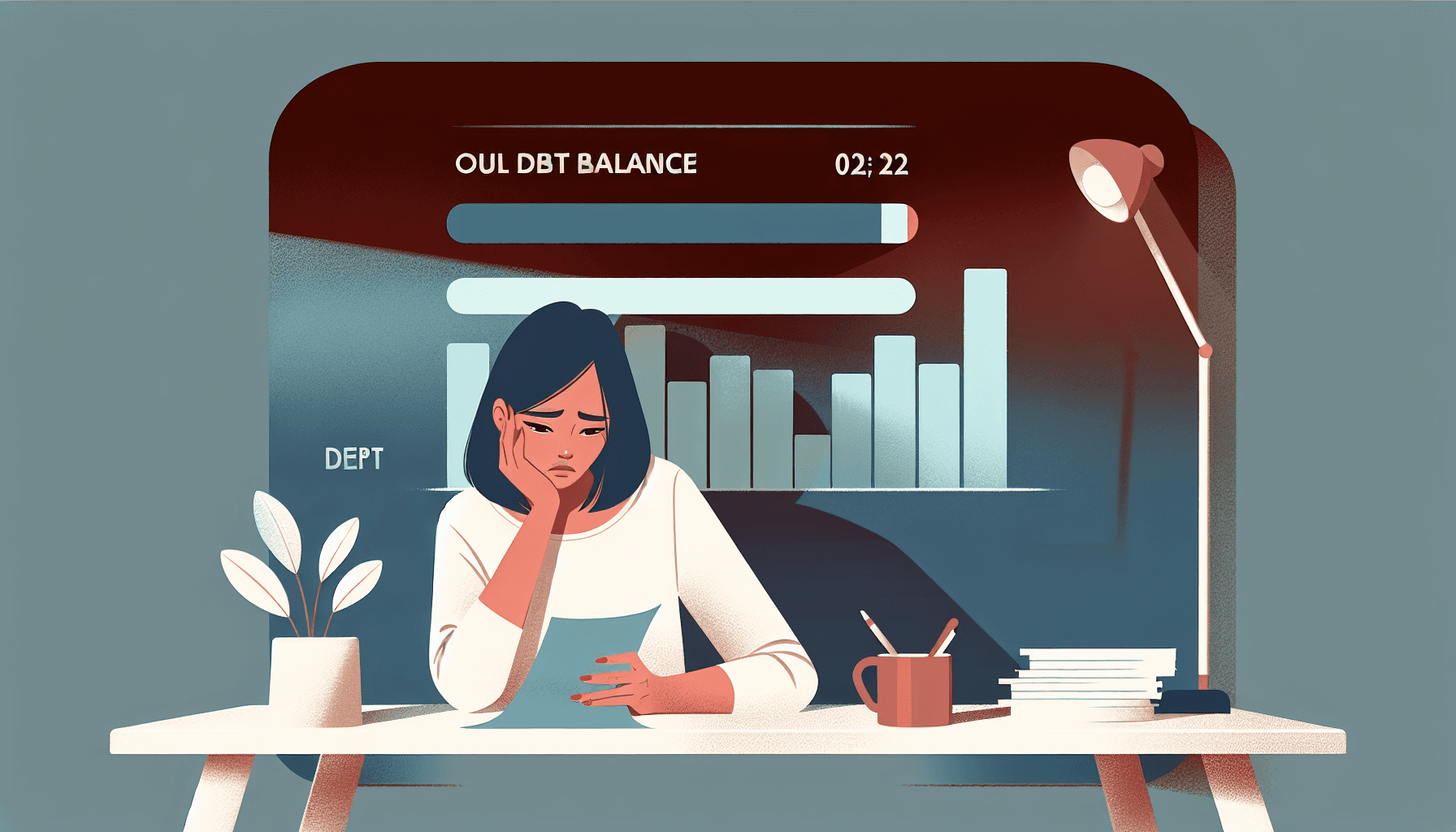
We've all been there. You open your credit card statement, see a balance of $5,000, and feel a wave of relief when you see the "Minimum Payment Due" is only $125. It feels like a win—you get to keep your money and stay "current" with the bank.
But behind that small number is a mathematical machine designed to keep you in debt for decades. In this guide, we'll pull back the curtain on how minimum payments work, how they destroy your wealth, and why the "relief" they provide is actually a financial emergency.
Quick Reality Check
If you have a $5,000 balance at 22% APR and only pay the minimum:
The Anatomy of a Minimum Payment
Banks aren't picking a random number to help you out. They are using precise algorithms to maximize their "Customer Lifetime Value"—which is a corporate way of saying "how much interest can we get before they die or go bankrupt."
Most credit card issuers use one of two formulas:
- The Percentage Method: Usually 1% to 3% of your total balance. If you owe $10,000, your payment might be $200.
- The Interest + 1% Method: This is even more aggressive for the bank. They charge you all of the interest you accrued that month, plus exactly 1% of the principal balance. This ensures your debt *technically* goes down, but at a glacial pace.
The Daily Compounding Trap
Unlike a car loan or a mortgage, credit card interest usually compounds daily. Every day you carry a balance, the bank calculates interest based on your "Average Daily Balance." This means that even if you pay your minimum on the due date, interest has been stacking up for 30 days on the full amount.
By only paying the minimum, you are barely clearing the "daily rent" the bank charges you to use their money. The remaining "rent" is added to your balance, meaning next month you'll be paying interest on your interest.
The Invisible Cost: Credit Utilization
Many people think, "As long as I pay the minimum, my credit is fine." While it prevents a 30-day late mark (which is good), it destroys your Credit Utilization Ratio.
Credit utilization accounts for 30% of your FICO score. It is the percentage of your total available credit that you are currently using. If you have a $5,000 limit and a $4,500 balance, your utilization is 90%.
Lenders see high utilization as a sign of financial distress. Even if you've never missed a payment, a 90% utilization can drop your credit score by 50 to 100 points. By only paying the minimum, you keep your utilization high for years, which could prevent you from getting a mortgage or a lower-interest car loan in the future.
The 'Amortization Trap' vs. Fixed Payments
In a standard loan, your payment stays the same every month. As the balance drops, more of that payment goes to the principal. This is called a "fixed-payment amortization."
Credit cards use a "decreasing-payment amortization." As your balance drops, your minimum payment also drops. If your balance goes from $5,000 to $4,500, the bank might lower your minimum from $125 to $112.
This is designed to keep you in the loan. If you follow the bank's decreasing path, you'll never reach the end.
How to Beat the System: The Fixed Payment Strategy
The easiest way to beat the bank's math is to ignore their decreasing minimums.
Look at your current statement. If the minimum is $150, commit to paying $150 every single month until the debt is gone, even when the bank says you only owe $120, then $90, then $60. This creates a "snowball effect" within a single card, as a larger and larger percentage of your $150 goes to principal every month.
Psychological Impact: The 'Debt Fatigue'
Beyond the money, there is a heavy psychological cost to minimum payments. We call it Debt Fatigue. When you work hard all month and send $150 to a credit card, only to see the balance drop by $15, it feels hopeless.
This hopelessness leads to "lifestyle creep" or "revenge spending." You feel like you'll never be out of debt anyway, so why not buy that new TV or go out to dinner? This cycle is exactly what keeps millions of Americans trapped in a middle-class "treadmill" where they earn good money but never actually build wealth.
Comparison: Minimums vs. Fixed Payments
See how the math changes when you take control of your payment amount instead of letting the bank decide.
| Strategy | Time to Pay Off | Interest Paid | Success Rate |
|---|---|---|---|
| Minimums Only | 242 Months | $11,200 | Low |
| Fixed Payment | 62 Months | $3,150 | Medium |
| Fixed + $50 | 38 Months | $1,840 | High |
Summary: Your Escape Plan
If you are currently paying the minimum on your cards, do not panic. Follow these steps to break the cycle:
- 1Stop the Bleeding: Do not put a single new charge on the card. Use a debit card or cash for all purchases.
- 2Find Your "Floor": Determine the absolute maximum you can afford to pay on that card right now.
- 3Set Autopay for a FIXED amount: Do not let the bank dictate the payment. Set it for your "floor" amount and leave it there.
- 4Use the Debt Snowball: If you have multiple cards, pay the minimums on all but the smallest one, and throw every extra dollar at that smallest balance.
Frequently Asked Questions
Ready to break the cycle?
Use our calculators to see exactly how much you can save and when you'll be debt-free.

Daniel Reeves
Wyzfin Editorial Team
Daniel Reeves is a pen name used by the Wyzfin editorial team. Our content is researched and written by finance enthusiasts and reviewed for accuracy before publication.
View Author ProfileLast Updated: May 2026
Wyzfin calculators and guides are for educational purposes only. This is not professional financial advice. Always consult with a certified financial professional regarding your specific situation.